Building the audience before the newsletter
Three sponsors paid for a special coverage on organized crime and the economy. I designed the path from the coverage to its newsletter, and the order to launch it in.
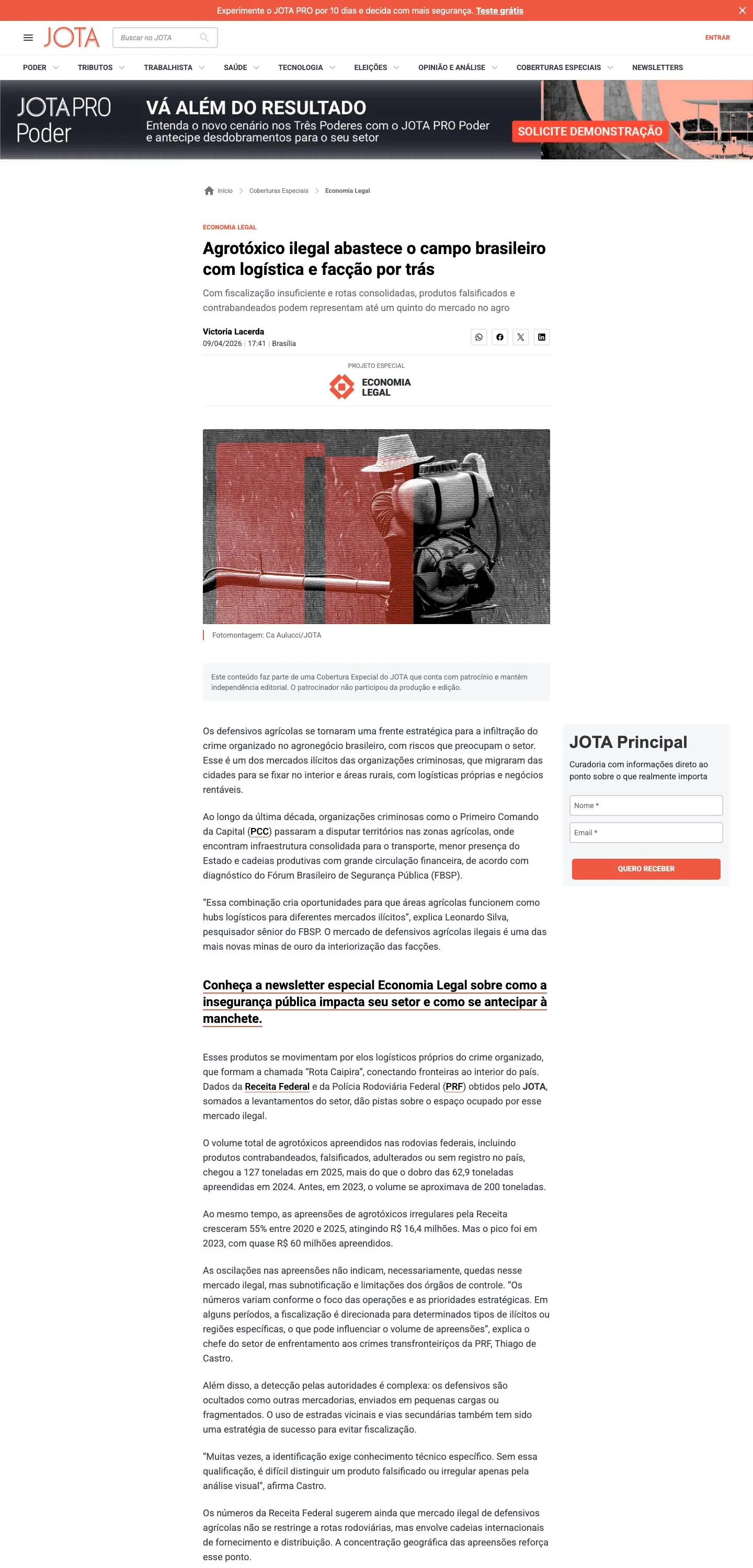
 Nome *Email *
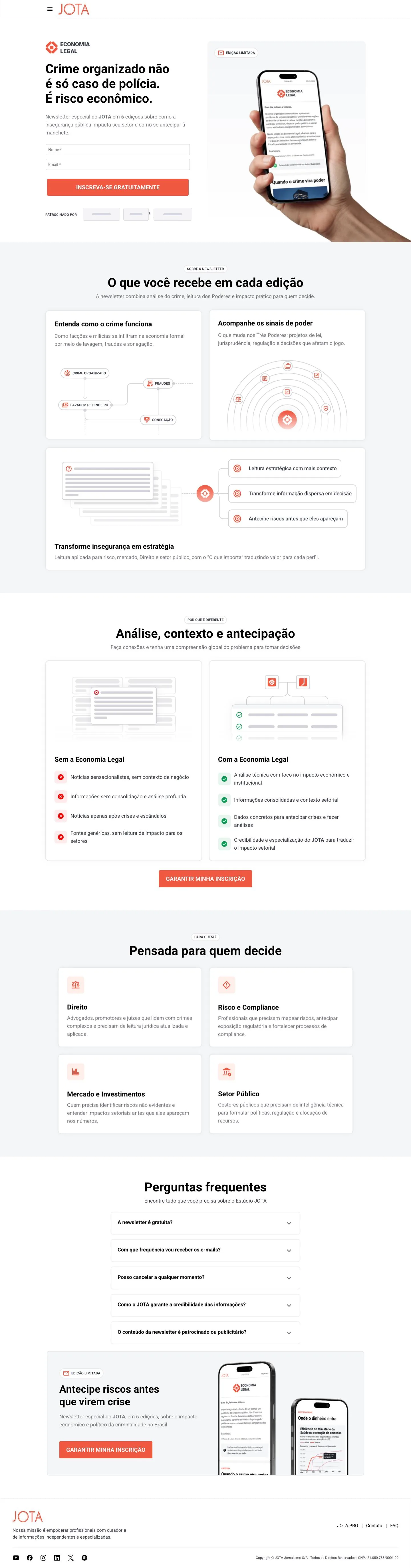 Nome *Email *


- I owned
- The launch order (hub, sign-up period, newsletter), the sign-up page and its tracking, and the newsletter’s template, built in RD Station. The hub used a sponsored-hub template I had designed before.
- Time
- October 2025 to April 2026, alongside other work.
- Not me
- The projects team found the opportunity and sold it. The newsroom and the brand studio wrote the stories and the editions, and chose their format. Marketing built the form, the integration and the sends.
- Tools
- Figma, RD Station, Google Analytics, AI for research.
Context
Three sponsors paid JOTA for a special coverage on how organized crime hurts the economy: a hub of stories on the site and a newsletter of six editions. The hub was already live. The newsletter wasn’t, and the sponsors expected readers from the first edition.
Research
I looked for funnels that turn coverage on a site into an exclusive newsletter, and for references for the sign-up page and the newsletter. AI helped me find and compare them.
- Empty listA new newsletter starts with no readers. The hub had readers, but we didn’t know who they were.
- Two prioritiesMarketing wanted the sign-up page first; the projects team wanted the newsletter first. Each piece depended on the other.
- Who’s readingSponsors pay to reach people who decide: lawyers, compliance teams, investors and public managers. The page had to speak to each of them.
Decisions
Solution
The stories point to a sign-up page, and the newsletter goes to the list it built.
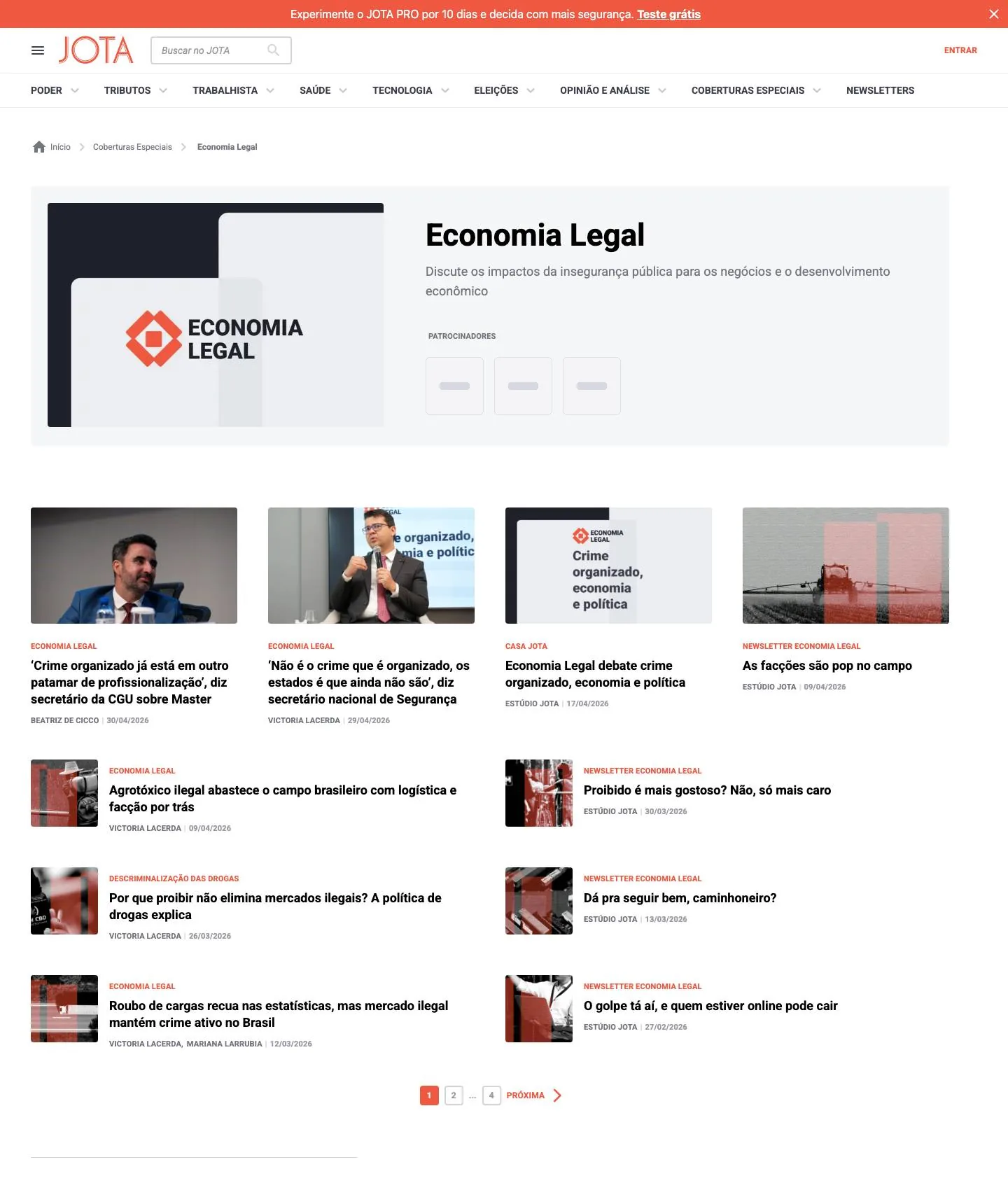
Empty listEach story links to the sign-up page, under the sponsors’ seal.
Who’s readingFour reader profiles, what each edition brings, and a two-field form.
Who’s readingEach edition opens with the case, follows the money, and ends with what matters for whoever decides.
Results
1,275 of the 1,319 sign-ups came in before the first edition. About 1 in 7 visitors to the sign-up page signed up. Marketing’s two emails brought most of them; other channels, the hub’s stories among them, kept adding people every week until launch.
- Today
- All six editions are out. There is no second season yet.
- What I can’t claim
- The sale; the projects team sold it as one package. The emails; marketing’s two sends brought 77% of sign-ups. And the hub’s own share, because its links had no tracking.
- Next time
- Tag every link from the coverage to the sign-up page on day one, so the hub’s part has a number.